Leggilo in italiano
Galaxies are among the most fascinating objects to be photographed, their light emission comes mainly from the stars so it has a continuum spectrum.
For this reason, the primary capture method with CCD cameras is through RGB broadbandfilters ot get true-color images.
Some spiral galaxies, however, …
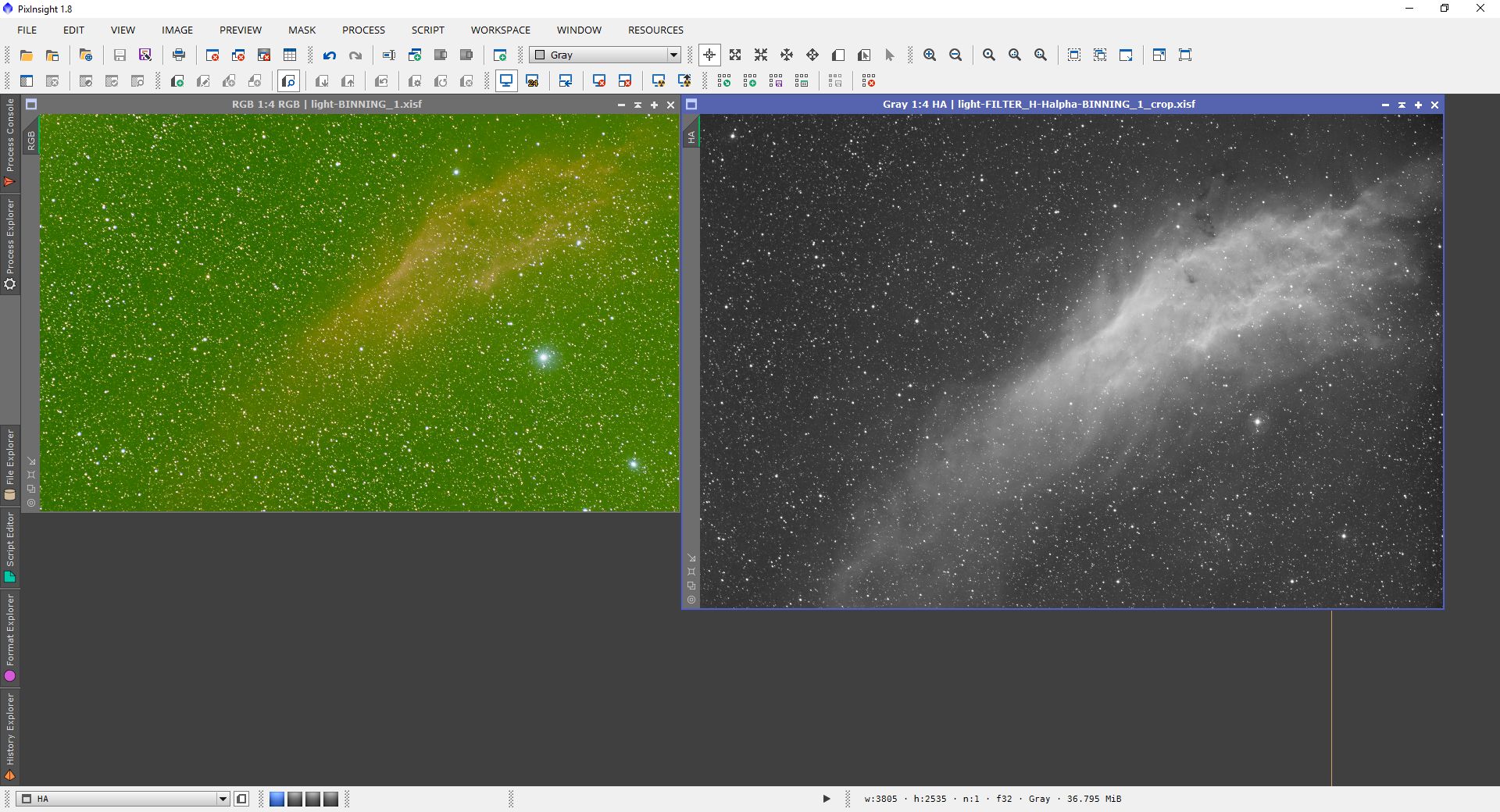
Warning! This article is now out of date and no longer applicable. Neural network-based tools can now handle both linear and nonlinear images perfectly, so LinearStarnet is no longer distributed. StarNet++ is a very interesting project by Mikita Misiura.
It’s a neural network based software to remove stars from …
This is the video of my Workshop held at CEDIC 2019 in Linz. It shows a way to compose narrow band data of emission nebulae into a near true color image.
The presentation can be downloaded HERE
Leggilo in italiano
Thanks to the collaboration with Roberto Sartori here our first PixInsigth script.
to be honest there is very little of me in it, only the “technical direction”, the programming part was done entirely by Roberto.
The script is used to quickly and effectively correct the problem of …
La fotografia astronomica moderna, basata sui sensori digitali, non termina alla fine della nottata di acquisizione delle immagini, una seconda e fondamentale fase attende il fotografo: l’elaborazione delle immagini.
Le informazioni sul soggetto astronomico ripreso sono nascoste sotto strati di disturbi: Rumore, …
Page translated by Claude — switch to Italian to read the original article.
In this video tutorial it will be explained how to process comet images so as to obtain the image of the comet stationary among the stars.
The starting data are a series of shots taken by my friend Emmanuele Sordini …
Page translated by Claude — switch to Italian to read the original article.
This tutorial, created by Edoardo Luca Radice and Vittorio Liberti of the Astrofili Veneti (http://www.astrofiliveneti.it/), aims to analyze and solve one of the possible problems that could be encountered when using PixInsight’s …
Page translated by Claude — switch to Italian to read the original article.
An extremely simple introductory video on the use of PixInsight’s basic tools:ScreenTransferFunctionHistogramTransformationCurvesTransformation
Designed for black-and-white images
Page translated by Claude — switch to Italian to read the original article.
In the February 2018 issue of the magazine Nuovo Orione, an article written by Luigi Fontana appeared about the acquisition and processing of images acquired with two different setups.
In the article, in a sidebar, I explained how to apply the …
Page translated by Claude — switch to Italian to read the original article.
During the “brainstorming” session of the PixInsight Workshop at the Torre del Sole on May 27 and 28, 2017, I was asked for advice on how to process an image of NGC 891
The image is an LRGB capture taken from the city sky of …
Page translated by Claude — switch to Italian to read the original article.
INTRODUCTION
N.B. The procedure described below is still experimental and may not give the hoped-for results.
At the moment it seems to work quite well on images of objects with broadband emission (galaxies, star clusters) while it gives …
Leggilo in Italiano
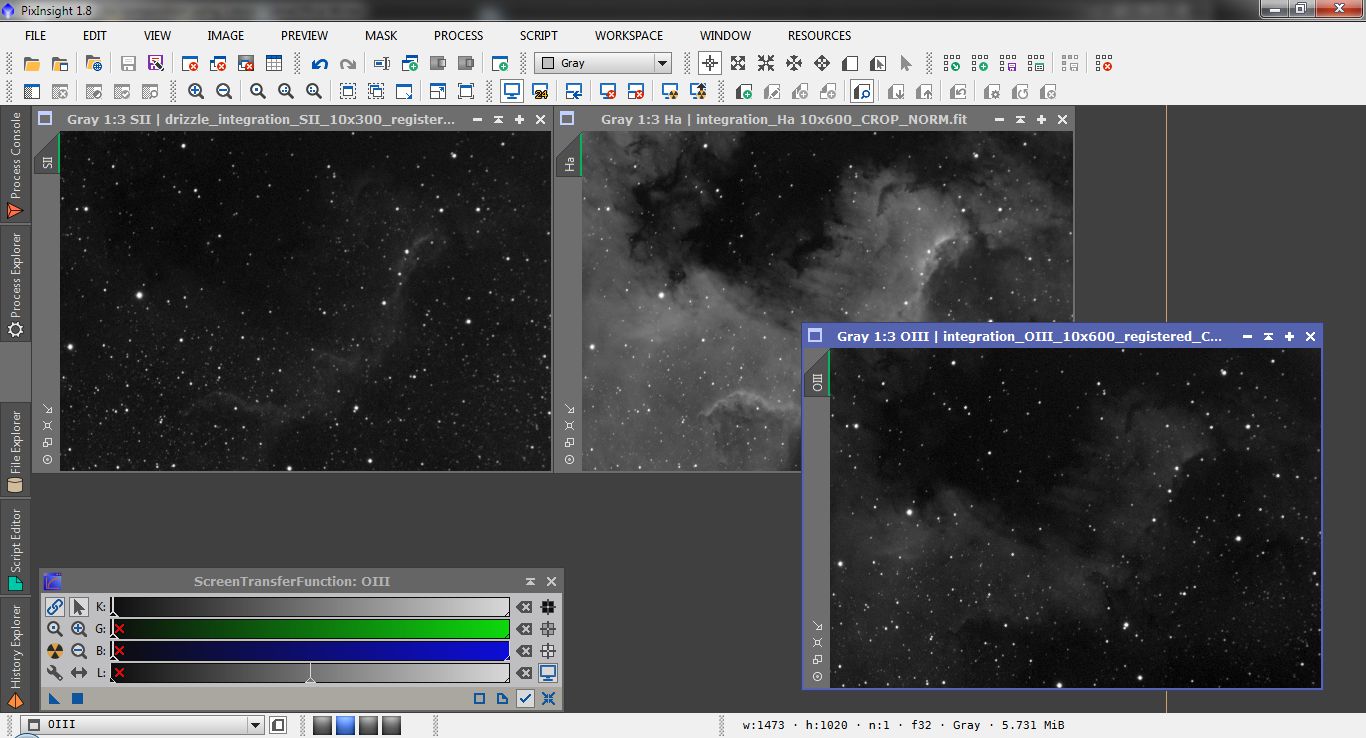
Recently I began to take astronomical pictures in narrow band using my SBIG ST2000XM and a set of Baader Filters (Hα, Hb, OIII and SII).
One of the most famous color composition technique of narrowband data is the Hubble Palette that gives to nebulas a typical golden-turquoise color palette.In this …
Leggilo in italiano
I recently participated in an astrophotography processing contest promoted by Martin Liersch website.
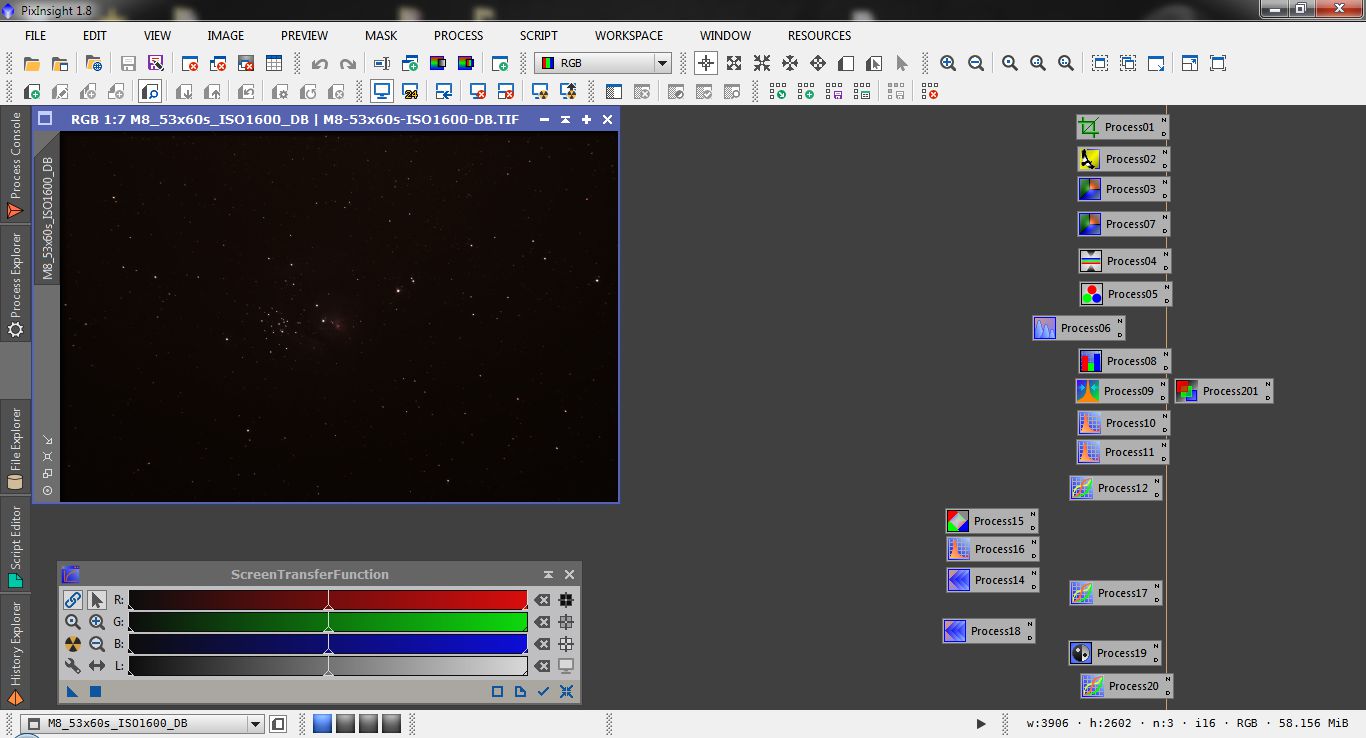
The contest was focused on a picture of M8 taken on a quite light polluted sky: this image is an example on how PixInsight could be great on dealing with such problematic pictures.
These the …
Leggilo in italiano
INTRODUCTION
As everyone knows PixInsight is a formidable tool for deep sky astrophotograpy processing: it gives to the imager a lot of tools that goes from preprocessing to the final touch on any astronomical picture.
Less knows that PixInsight is a powerful tool for planetary processing too.
Leggilo in italiano
INTRODUCTION
In recent years narrow band filters astrophotograpy has spread widely among amateurs for various reasons.
Personally I chose this technique because I can successfully take pictures from skies with a certain amount of light pollution.
The better targets for this kind of photography are …